


Thirty years after the massacre at Lemera Hospital in the DRC, the organization founded by Nobel Peace Prize laureate Dr. Denis Mukwege calls on the world to act
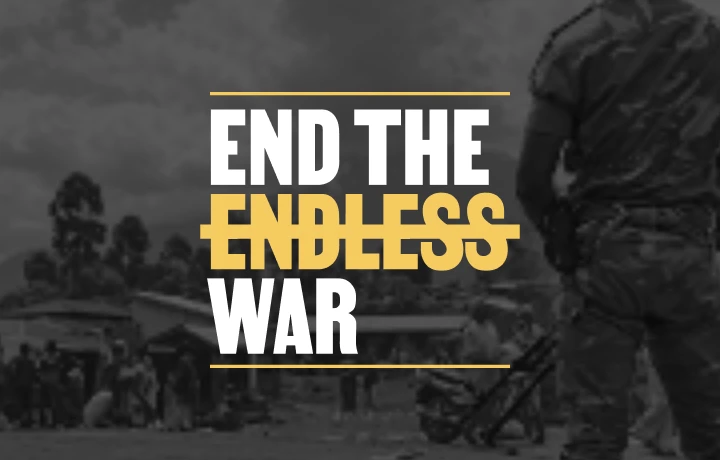
WASHINGTON, October 6, 2026 – Today, Panzi launched #EndTheEndlessWar, a global education and advocacy campaign to mobilize people around the world to call for an end to three decades of conflict in the eastern Democratic Republic of the Congo (DRC). One of the deadliest conflicts since World War II, the war has killed an estimated six million people, displaced millions more, and subjected women and children to widespread violence, including sexual violence.
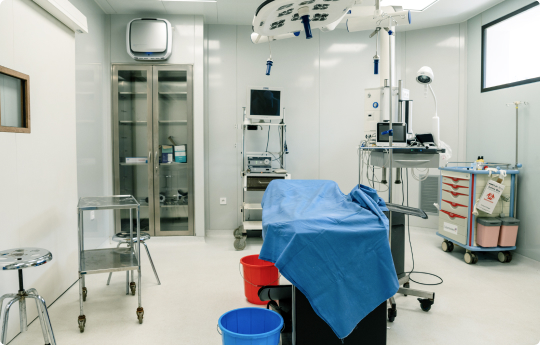
The launch marks 30 years to the day since the attack on Lemera Hospital in South Kivu province in eastern DRC, where Dr. Denis Mukwege then served as an OBGYN and the Medical Director. On October 6, 1996, armed men entered the hospital and killed all those who could not flee in time: nearly 40 people, including patients and health providers. For Dr. Mukwege and the surrounding community, this crime against humanity marked the beginning of what was to become 30 years of war. Today, Panzi Foundation honors the lives lost in this devastating massacre and calls for a just conclusion to the conflict – an end to the endless war.
Since the late 1990s, violence in eastern DRC has been prolonged and aggravated by foreign interference, the proliferation of armed groups, and fierce competition over the DRC’s vast mineral wealth. Last year, the M23 armed group aggressively expanded the territory it controls in eastern DRC, backed by troops and support from neighboring Rwanda. In the first months of 2025, M23 captured the cities of Goma and Bukavu, shuttering the regions airports, driving out the provincial governments, and displacing millions of people.
20 months later, an estimated 9 million people live under M23’s control, cut off from the rest of the DRC. Peace efforts at the global level have yet to address the root causes of the conflict, improve security conditions, or restore the DRC’s territorial integrity.
Panzi’s campaign calls for meaningful action from global actors to resolve the conflict. Over the next two months, Panzi will release a series of videos highlighting three urgent themes: (1) the epidemic of sexual violence against women and girls; (2) the illicit mineral trade that helps finance armed groups; (3) and the action required to build a just and lasting peace.
Everyone can be part of it: watch, share, and take action by writing to elected representatives in the US, Belgium, France and the European Parliament to demand the withdrawal of foreign forces, tougher sanctions, protected humanitarian aid and accountable minerals deals, and by signing a petition urging President Tshisekedi to establish an international justice process for the serious crimes committed in the DRC.
“There is an urgent need to act and to put an end to the suffering of the Congolese population, which has already gone on for far too long, ” said Dr Denis Mukwege.
In Belgium, the City of Brussels has launched an accompanying campaign focused on the need for justice after three decades of war, as well as the urgency of humanitarian support for affected Congolese communities, including a panel discussion with Dr. Denis Mukwege at Brussels City Hall on 2 October. In France, on 6 October, the anniversary of the Lemera massacre, the Fondation René Cassin and the Panzi Foundation are hosting the conference “30 Years of War, 30 Years of Impunity,” where Dr. Mukwege joins speakers from Human Rights Watch and the International Criminal Court. The conference will be streamed live on YouTube from 3 to 5 p.m. CEST. In Kinshasa, a national forum is bringing together people from across society, including victims’ groups, students, politicians, faith leaders, and the media, as a show of national solidarity and collective demand for peace and justice.
To join the movement, visit panzi.org/endthewar and follow #EndTheEndlessWar.
About Panzi
Panzi Hospital and Foundation (Panzi) is a center of excellence for the care and treatment of survivors of sexual violence in the DRC. Panzi’s holistic care model integrates medical treatment, psychosocial support, legal assistance, and socioeconomic empowerment to ensure that survivors regain their dignity and rebuild their lives. This comprehensive care is provided by a staff of over 700 people through our flagship hospital, One-Stop Centers, and mobile clinics, ensuring that survivors receive the full spectrum of support they need. Since 1999, Panzi has treated over 91,000 survivors of sexual violence and performed more than 30,000 surgeries for complex gynecological injuries.