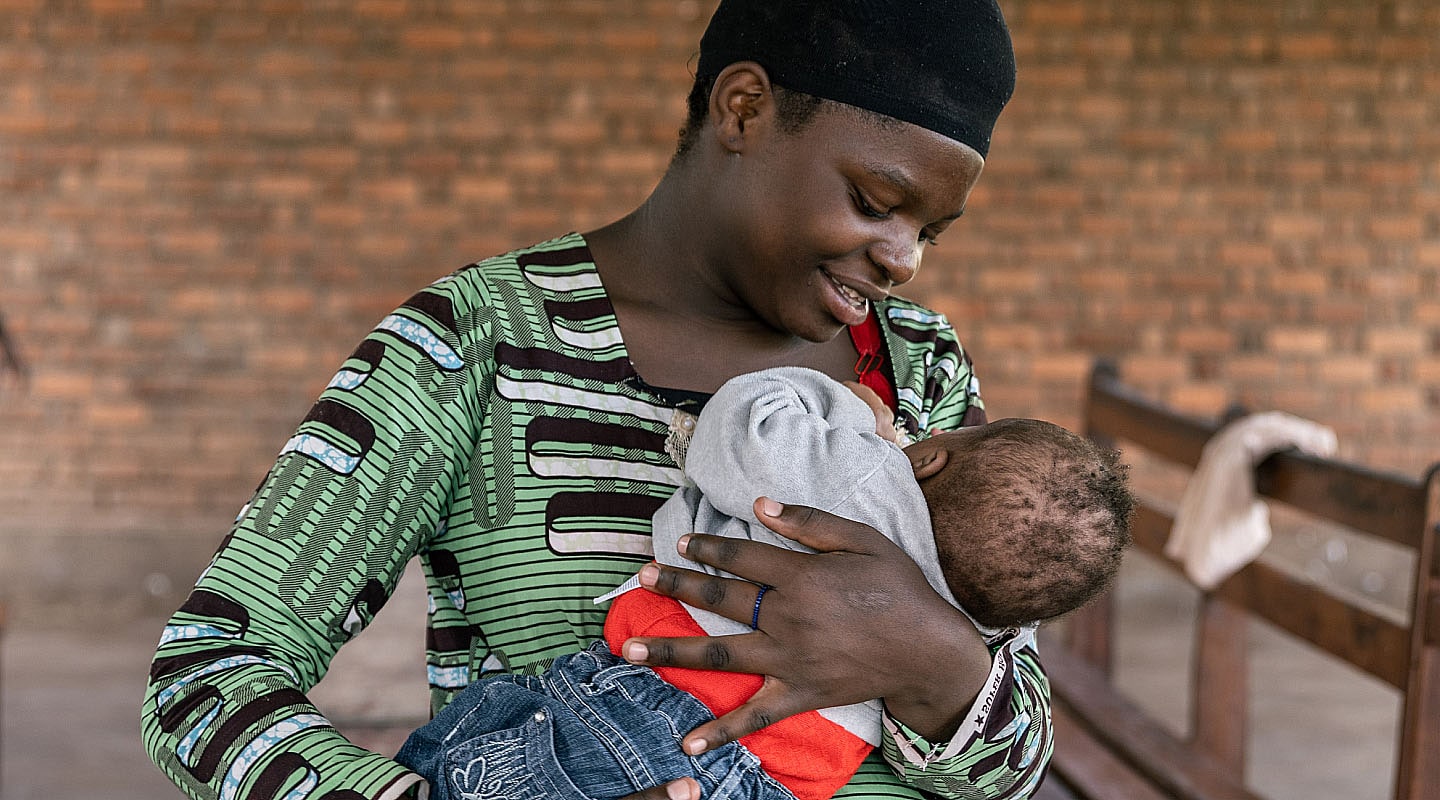
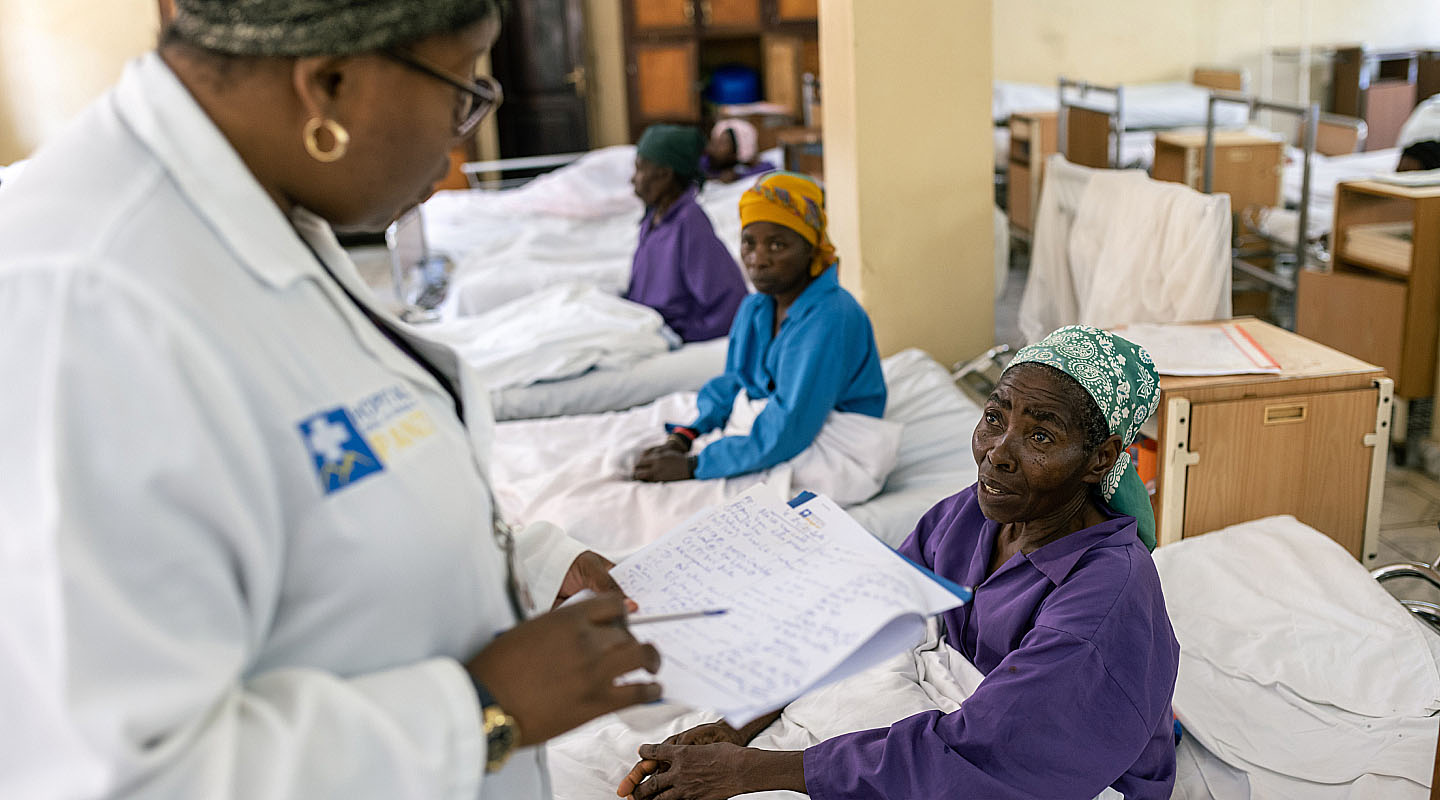
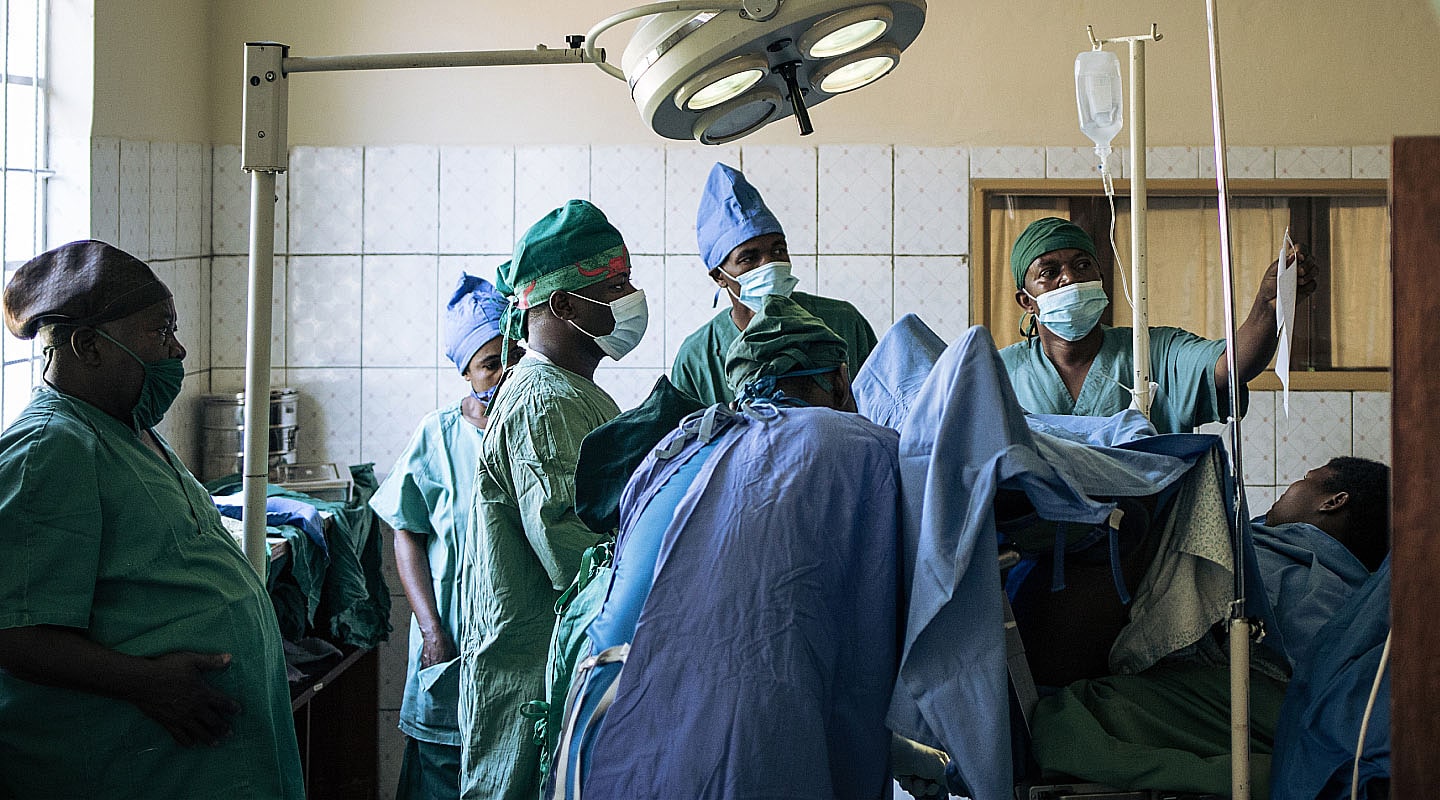
Panzi Foundation & Hospital is a nonprofit organization headquartered in Bukavu, Democratic Republic of Congo, with a satellite office in Washington, D.C.
As a Congolese organization, we work with Congolese people, for Congolese people, to find sustainable solutions to pressing issues. From response to prevention, we are innovating for a stronger Congo.
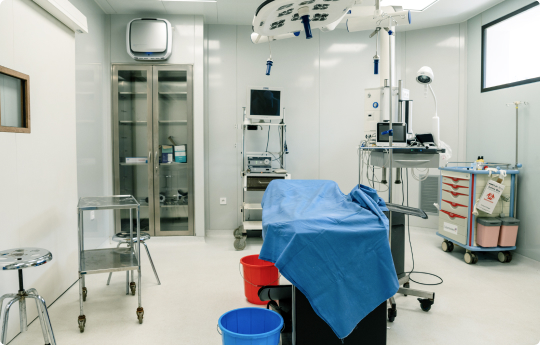
Panzi Hospital is a general hospital in Bukavu, DRC. Founded by Dr Denis Mukwege in 1999, Panzi is world-renowned for its treatment of survivors of sexual violence and gynecological injuries.

While we always welcome financial contributions, we also need donations of time, creativity, and skill—from fundraising and education to action on a global scale.
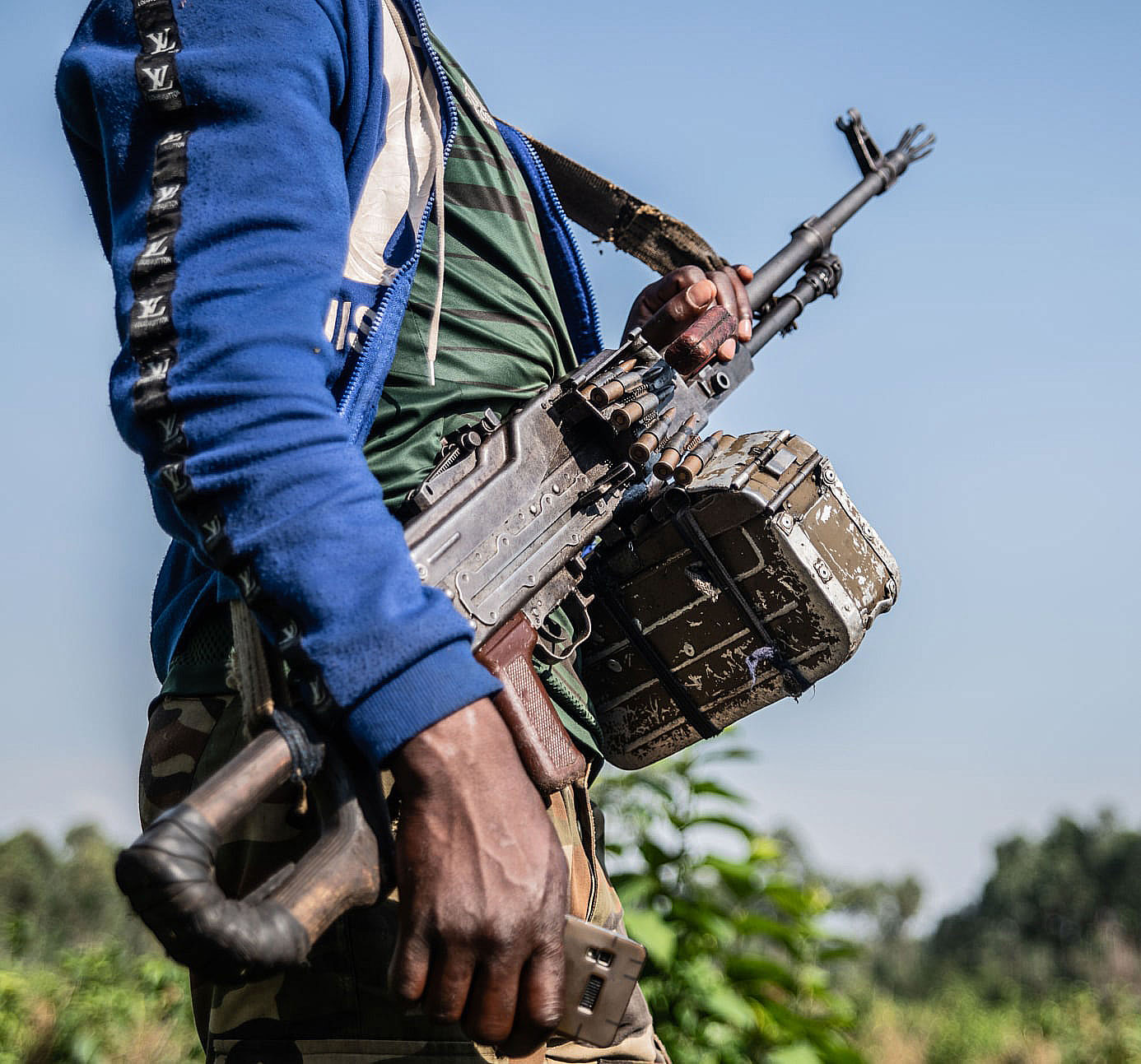
Countless women and girls experience sexual violence every day in the DRC, a tragedy which is heightened by the ongoing conflict.
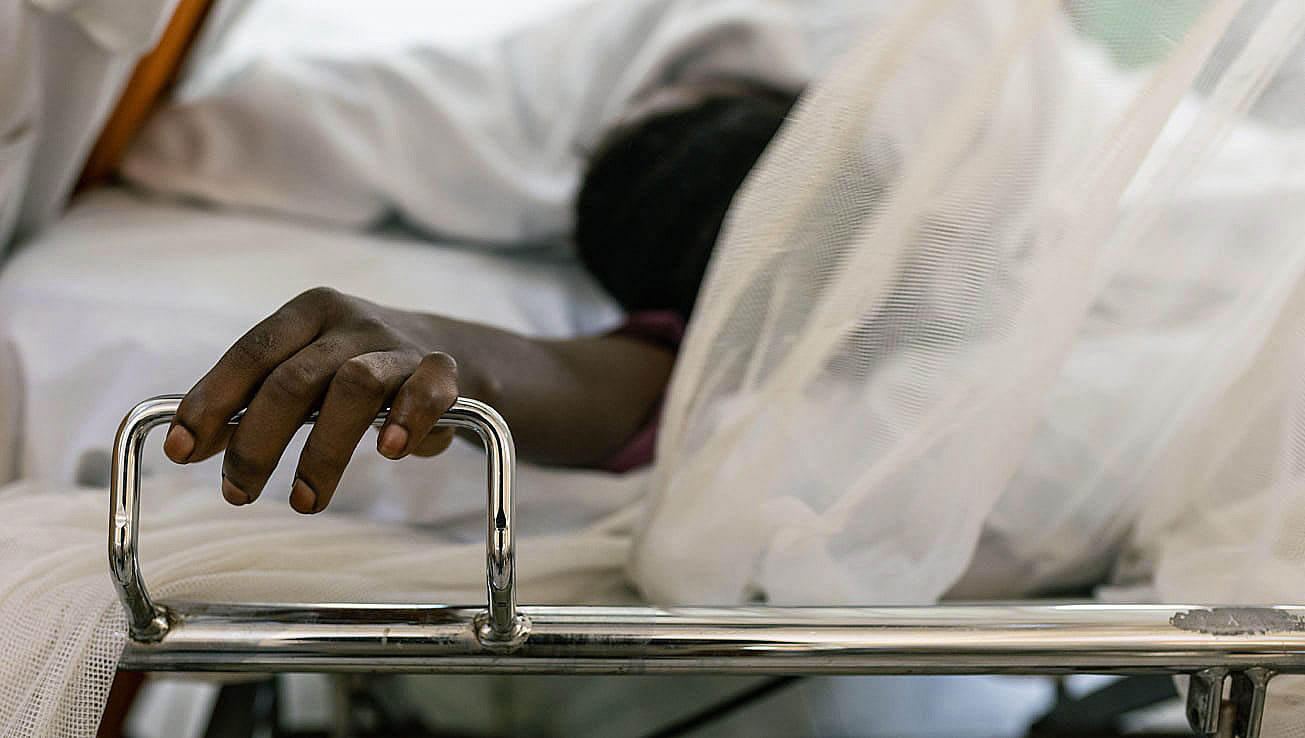
But for more than 25 years, Panzi has not only mended survivors’ bodies and delivered their babies, we’ve supported them as they boldly reclaim their lives, against all odds.
Countless women and girls experience sexual violence every day in the Congo, a tragedy which is heightened by the ongoing conflict.
But for more than 25 years, Panzi has not only mended survivors’ bodies and delivered their babies—we’ve supported them as they boldly reclaim their lives, against all odds.
After the sexual violence, I didn’t feel like the same person. I thought I would die. I felt like I didn’t know how to describe what I was feeling. I didn’t even understand myself...
Sexual violence ripped her family apart, But she’s created a community of female artisans
After the sexual violence, I didn’t feel like the same person. I thought I would die. I felt like I didn’t know how to describe what I was feeling. I didn’t even understand myself...
Her injuries left her unable to walk, or even stand, But now she runs her small business
After the sexual violence, I didn’t feel like the same person. I thought I would die. I felt like I didn’t know how to describe what I was feeling. I didn’t even understand myself...
From kidnapped child to courageous nurse, she brings others with her on the path to healing
OUR IMPACT SINCE 1999
Panzi Hospital & Foundation exists to reduce the prevalence and impact of sexual and gender-based violence through holistic care and community outreach, in order to promote a more equitable and dignified future for all.
0X
more likely to survive
giving birth at a Panzi facility compared to the national average
0+
survivors treated across all programs at Panzi Hospital & Foundation since 1999
0+
surgeries for women with complex gynecological injuries over 25 years
Global Justice Expert Kim Thuy Seelinger Joins Panzi Foundation Board
WASHINGTON, August 13, 2026 – The U.S. Office of Panzi Foundation is proud to announce that Ms. Kim Thuy Seelinger has joined its Board of Directors, effective July 16, 2026. A leading expert on gender-based violence in armed conflict and forced displacement, Ms. Seelinger has spent her career strengthening the justice and support systems available to survivors of conflict-related sexual violence.
Ms. Seelinger holds faculty positions in both Public Health and Law at Washington University in St. Louis, where she joined as the inaugural director of the Center for Human Rights, Gender and Migration in 2019. She first met Dr. Denis Mukwege in 2007 and visited Panzi Hospital and Foundation in 2014 while studying responses to conflict-related sexual violence in eastern Democratic Republic of the Congo. In the years since, she has continued to support local justice and survivor-support efforts in the region while influencing critical global policies through applied research and technical assistance.
In 2021, Ms. Seelinger was appointed Special Adviser on Sexual Violence in Conflict to the Prosecutor of the International Criminal Court in The Hague. She later became the Office’s first Senior Coordinator on Gender-based Crimes and Crimes Against and Affecting Children, overseeing implementation across all trial teams, including the DRC situation, before returning to Washington University in August 2025. A practicing lawyer, Ms. Seelinger has also represented survivors of conflict-related sexual violence for years, is a graduate of New York University School of Law, and remains an active member of the New York State bar.
Before joining Washington University, Ms. Seelinger directed the award-winning Sexual Violence Program at the Human Rights Center at the University of California, Berkeley, School of Law, where she also taught courses on the law of armed conflict and refugee protection, and remains a Senior Research Fellow there.
“Kim has stood with Panzi for nearly two decades, long before she joined our Board,” said Panzi’s founder and 2018 Nobel Peace Prize Laureate, Dr. Denis Mukwege. “Few people understand as well as she does how research, policy, and international justice must connect back to survivors themselves and I have watched her bring survivors’ voices into rooms where accountability is decided. She joins us not as a newcomer, but as a longtime partner in this fight, and we are grateful to have her expertise guiding Panzi’s next chapter.”
“In nearly two decades of working alongside Dr. Mukwege and the Panzi team to strengthen survivors’ access to support and justice, I have learned so much from them about holistic care, individual and community healing, and the urgent need for global response to the ongoing crisis in eastern DRC” says Ms. Seelinger. “As I travel across conflict zones and other humanitarian crises around the world, Panzi’s holistic model of care has always been my reference point for how to approach survivor-centered care, even in the most fragile and insecure settings. I am now honored to join the Panzi board.”
“I hope to bring both my technical skills and my deep relationships to the table, to support survivors and the incredible Panzi staff, strengthen awareness and collaboration, and deepen our understanding of holistic care itself.”
—
About Panzi Foundation Panzi Hospital and Foundation provides survivors of sexual violence with access to compassionate, holistic care in the Democratic Republic of Congo. At Panzi, survivors receive comprehensive health services, psychosocial support, job-skills training and socio-economic reintegration opportunities, as well as access to legal services. Since 1999, Panzi has served over 91,000 survivors across the country, empowering them to not only survive, but to thrive as they rebuild their lives.
July 20, 2026
Preventing the Spread of Ebola: The Plant Keeping Communities Safe
The 17th Ebola epidemic, caused by the Bundibugyo strain, was first detected in eastern DRC in late May – starting in Iutri before spreading to North Kivu and South Kivu. This week, a new case has recently been detected in Kisangani, a sign that the disease continues to progress. According to the National Institute of Public Health (INSP), 1,406 cases have been recorded in total with 438 deaths, a fatality rate of 31.2%.
In this challenging context, land borders with Rwanda and Uganda remain closed, while the airports of Goma and Bukavu have been shut down since rebels took over these cities in early 2025, limiting the external supply of medical supplies. Several hospitals in the city now find themselves unable to source alcohol and disinfectants. For this reason, Panzi Foundation’s bioethanol plant stands as a safeguard against the spread of the virus.
What is bioethanol?
Bioethanol is an ethyl alcohol created by fermenting sugar-rich plant materials, such as sugarcane. It is used as a disinfectant, solvent, or fuel, and should not be confused with drinking alcohol. Panzi Foundation’s plant produces 96% bioethanol, intended exclusively for medical disinfection and the production of hydro-alcoholic solutions.
A response to broken supply chains
During epidemics, 96% bioethanol is essential for disinfecting hands, surfaces, protective equipment, and treatment centers. Since it launched in 2024, the unit has primarily supplied health facilities, laboratories, pharmaceutical warehouses, and other institutional users in the city of Bukavu, whose annual demand for medical bioethanol is estimated at around 77,000 liters.
Border closures and conflict have resulted in severe disruptions to the supply chain. Panzi Foundation’s bioethanol plant has filled key gaps for health facilities across the region. Without this local production, many hospitals in Bukavu would have otherwise depleted their stock of disinfectant, a grave risk in the face of an epidemic that threatens frontline staff and treatment sites. Thanks to Panzi’s plant, hospitals in our network are now able to maintain minimum standards of infection control and can continue to respond to Ebola.
“After a start marked by technical and financial challenges, our plant is entering a new phase. We are progressively scaling production to better meet the needs of hospitals, health centers, and laboratories fighting infectious diseases, including Ebola.”
— Joël Bisimwa, Manager of the bioethanol production unit
Health sovereignty driven by women producers
In order to produce the bioethanol, large quantities of sugarcane are needed. Behind this production are 300 inspiring women, members of Village Savings and Loan Associations (VSLAs), mutual aid groups where members save together and extend each other small loans. Supported by Panzi Foundation, these women have access to land and resources which enables them to supply the plant’s raw material.
A diversified economic model
Beyond alcohol and disinfectants, the plant also sells sugarcane juice as well as purified water. Sold locally, these products help diversify the plant’s revenue and meet the community’s everyday needs, while reinforcing economic viability. By securing access to disinfectants for Bukavu’s health facilities, Panzi’s bioethanol plant shows how a locally driven, women-led solution can build lasting health resilience in a region facing crisis.
Panzi plans to expand this program in coming years, with the goal of further economically empowering women, and also strengthening the region’s health sovereignty.
July 16, 2026
Panzi’s Take on DRC’s Historic Run at the 2026 World Cup
Panzi Foundation and Hospital Staff Reflect on the World Cup that Reached Across the Frontlines
The DRC Leopards’ run at the 2026 World Cup was about far more than football history. It gave the world something rare: a glimpse of a people who, in spite of everything, refuse to be broken, standing together, flag in hand. For weeks, millions of Congolese were swept up in it. On the streets of Kinshasa and in the alleyways of Goma, Bukavu, Bunagana, and Beni, the same eruptions of joy, the same songs, the same electricity. For the first time in 52 years, the Leopards were on the world stage, and the whole country was holding its breath.
At Panzi Foundation and Hospital, where the work makes it hard to to forget what the people in eastern Congo are living through, the tournament hit differently. Caregivers, psychosocial counselors, field staff, everyone felt it. Vira put it simply: seeing the Leopards at this World Cup was “something like a bandage over the wound, the shame that war and the disregard for our humanity have left on us.“
But not everyone could just celebrate.
Some felt joy and grief at the same time. Thérésita didn’t hold back: “Football is a leisure activity, and leisure is something only a free person can really enjoy. Someone who is at peace. Who has enough to eat. Who can meet their basic needs without fear. The whole world has shown up for this World Cup. Why won’t it show up for the thousands of Congolese in the East, in North and South Kivu, who are living under occupation, trapped in their own homes, with no work, no banks, no airports, no freedom? If I were a Congolese player, I don’t think I could play. Because on the same day a family is burying someone, their child could not dare think of scoring goals. The war in eastern Congo, the Ebola epidemic, these should be triggering the same level of global response. The world that comes together for a football tournament could come together twice as powerfully for the people of eastern Congo who are suffering. I have no words for how devastating it is to watch the world stay silent.”
Vermis took that anger and turned it into something that sounds almost like a rallying cry: “In a country that has been torn apart by war, disease, and sealed borders, where the international community still can’t seem to find its footing, a group of Congolese people with a football did something no one thought possible: they got the guns to go quiet, long enough for an entire people to feel joy. That brief ceasefire along the front lines tells us something important: walls come down when people decide they should. If the desire to celebrate together was stronger than the war, then the desire to protect civilians and get humanitarian aid through should be even stronger.
“Peace isn’t some distant miracle. It’s a choice. Silence the guns. Joy is contagious, and it’s truly the most powerful driving force of development we have.” – Vermis
The 2026 World Cup showed the world a different DRC, not the one defined by its crises, but a nation that is resilient, passionate, and deeply united when it matters. At the same time, it raised a question that deserves an honest answer: why does the world find it so easy to mobilize for a sporting event, but not for the people whose lives are being destroyed by war and neglect?
For Panzi Foundation and Hospital, this world cup journey reinforces a profound convition: the dignity of a people is not measured only by its victories, but by its ability to stand tall, to hope, and to demand justice, even in the most harrowing circumstances. And if football can silence the guns – even for a moment – then anything becomes possible. Provided the world agrees to look beyond the playing field.
To provide the best experiences, we use technologies like cookies to store and/or access device information. Consenting to these technologies will allow us to process data such as browsing behavior or unique IDs on this site. Not consenting or withdrawing consent, may adversely affect certain features and functions.
Functional
Always active
The technical storage or access is strictly necessary for the legitimate purpose of enabling the use of a specific service explicitly requested by the subscriber or user, or for the sole purpose of carrying out the transmission of a communication over an electronic communications network.
Preferences
The technical storage or access is necessary for the legitimate purpose of storing preferences that are not requested by the subscriber or user.
Statistics
The technical storage or access that is used exclusively for statistical purposes.The technical storage or access that is used exclusively for anonymous statistical purposes. Without a subpoena, voluntary compliance on the part of your Internet Service Provider, or additional records from a third party, information stored or retrieved for this purpose alone cannot usually be used to identify you.
Marketing
The technical storage or access is required to create user profiles to send advertising, or to track the user on a website or across several websites for similar marketing purposes.
The crisis in eastern Congo is ongoing. By supporting Panzi, you join a global movement working to provide urgent care, dignity, and justice for those suffering.